




Dota 2 puts your teamwork and strategy to the test every match, forcing you to coordinate picks, map control, and timing under pressure. You’ll face shifting metas, asymmetric objectives, and opponents who punish split-second mistakes—so mastering communication and role clarity becomes the difference between a comeback and a collapse. If you learn how to synchronize drafts, execute coordinated rotations, and adapt strategic plans on the fly, you’ll turn chaotic matches into consistent wins.
This article breaks down how Dota 2’s 5v5 structure rewards precise collaboration, outlines essential team roles and in-game tools to streamline coordination, and gives practical tactics to read opponents and adjust strategy mid-game. Expect clear, actionable guidance on building a winning team mindset and using popular game modes to practice the skills that matter most.
Understanding Dota 2’s Team-Based Gameplay
You coordinate map control, resource allocation, and timing to outplay the enemy team. Expect to manage lane assignments, item progression, vision, and objective timing while adapting to enemy draft and in-game events.
Core Game Mechanics
Dota 2 centers on destroying the enemy Ancient while keeping yours alive. You gain gold and experience by last-hitting creeps, securing kills, taking towers, and controlling neutral camps. Gold buys items that change a hero’s power curve; experience levels unlock or improve abilities.
Vision and map control matter: wards reveal enemy movement and enable safe rotations or ganks. Roshan provides a significant team-power spike through Aegis; contesting or securing Roshan often decides mid-to-late game fights. Objectives follow a rhythm—laning, skirmishes, tower trades, Roshan—and you time item spikes and cooldowns around that rhythm.
Importance of Team Composition
Team composition determines your win conditions and draft flexibility. You should pick heroes that cover damage types (physical vs. magical), crowd control, initiation, and sustain. Balance early-game pressure with late-game scaling—too many late-game carries can lose you lane control; too many early game heroes can fall off later.
Consider synergy and counters: combine stuns with heavy burst for reliable kills, or pick waveclear if the enemy favors split-push. Item needs also matter; if your lineup requires Mek/Guardian Greaves or Blink Dagger, ensure someone can farm them. Draft around Roshan timers and map-play—heroes with strong teamfight ultimates or objective-taking abilities shift how you contest towers and Roshan.
Role Assignments Within the Team
Dota uses five core roles (Position 1–5) that define farm priority and map responsibilities. Position 1 (carry) farms primary gold sources to scale into late-game damage. Position 2 (mid) seeks levels and solo experience to influence lanes and gank. Position 3 (offlane) creates space, tanks pressure, and initiates fights.
Position 4 (soft support/roamer) provides early vision, ganks, and tempo items; you often rotate to secure kills and objectives. Position 5 (hard support) wards, buys team utility (smoke, detection), and sacrifices farm to keep the carry safe. Communicate item timings and summon/control priorities so everyone knows when to fight, when to farm, and who leads initiation.
Collaboration Strategies for Victory
You need clear roles, precise timing, and shared map awareness to turn small advantages into game-winning plays. Focus on concise communication, deliberate warding and objective control, and rehearsed attack patterns that match your team’s composition.
Effective Communication Techniques
Keep voice and chat concise. Use short callouts like “Smoke top, ready in 5” or “Rosh 30% HP” and assign a dedicated shot-caller for macro decisions. Limit ping spam; use the minimap ping for location and one-word follow-ups in voice (e.g., “push”, “engage”, “retreat”).
Standardize terminology before the game starts. Decide on phrases for specific actions: “stack camp,” “pull wave,” “BKB now.” This reduces confusion during skirmishes and smoke plays. Share cooldowns and item timings frequently—announce major ultimate and key item windows (e.g., “Doom ready, Urn on me”).
Manage tilt and keep comms task-focused. Mute repeat offenders quickly and keep morale by highlighting small successful plays verbally. After each fight, give one short evaluation: what went well and one corrective point.
Coordinating Map Control
Establish a warding plan tied to objectives. Place an aggressive observer near enemy jungle before a Roshan attempt and a defensive sentry to protect your high-ground approach. Rotate supports to maintain vision rather than leaving one player to solo-ward repeatedly.
Track neutral camp timers and enemy item timings on a shared mental clock. Call stack schedules and assign who clears stacked camps. Use control of runes and side lanes to force favorable fights: deny jungle access, then collapse with numbers.
Make objective windows explicit. When a key ultimate or BKB is down on the enemy, call for grouped movement toward towers or Roshan. If you lose vision, buy a smoke and re-establish wards before committing.
Executing Synchronized Attacks
Plan initiation chains that account for enemy disables and survivability. Start with reliable setup—Silences, stuns, or gap closers—then follow with burst from cores. Assign sequencing: who initiates, who follows, and who watches flanks or cleans up.
Practice timing in scrims or warm-up lobbies. Use countdowns in voice: “Three… two… go,” or quick numerical cues: “1-2-3” to ensure spells land together. Coordinate item usage too—synchronise BKBs, Shiva’s, and defensive saves like Guardian Greaves to cover initiation windows.
Assign positional roles during fights. One player engages front-line space, two focus chain disables, and the rest target high-value heroes or objectives. If a plan fails, have a retreat cue ready (e.g., “Back off” with a ping) to preserve numbers for the next attempt.
Essential Team Roles and Responsibilities
You need clear role assignments, consistent farm and vision priorities, and decisive initiation timing to win teamfights and objectives. Each core role balances resource intake with map control while supports shape tempo and information.
Support and Carry Dynamics
You allocate gold and experience so one or two cores (carries/mid) scale while supports sacrifice personal farm early. As a support, prioritize lane pulls, rune control, and warding; place Sentry and Observer wards around high-traffic areas and deward contesting spots before the 10–15 minute power spikes.
Communicate timing for the carry’s key items (Blink, BKB, Radiance, Battle Fury). Let the carry take last hits and priority farm in lane; rotate to stack ancients and secure bounty runes when safe. Use smoke ganks to create space and relieve pressure if your carry falls behind.
Build decisive utility items on supports—Force Staff, Glimmer, Mek—and buy detection. If you play carry, focus on efficient farming routes (jungle stacks, lane equilibrium) and safe timings for joining fights once core items are complete.
Offlane and Safelane Strategies
You choose offlane heroes to disrupt enemy farm and create space through pressure and tempo control. As offlaner, hold aggressive lane equilibrium, pull creep waves when advantageous, and seek solo XP while avoiding death. Prioritize surviving and building items that enable initiation or frontline presence (Pipe, Crimson, Blink, Hood).
Safelane play centers on enabling your carry; if you’re the safelane support, harass opponents and contest pull timings. If you’re the safelane core, focus on establishing lane dominance and then transitioning to objective-oriented farming—taking towers and securing Roshan windows.
Coordinate rotations: offlane rotations should pressure sidelanes when enemy supports leave, and safelane should call for rotations when the carry has an item timing. Use lane vision and creep wave management to force favorable fights or secure safe farm.
Midlane Leadership
You control tempo through level and item timings, which define when your team can take objectives or force fights. In mid, secure runes, dominate lane matchups with efficient last hitting and harass, and convert leads into map pressure by ganking side lanes or taking the first tower.
Select mid items based on matchup and tempo—Eul’s, Blink, Orchid, Shadow Blade, or early mobility and magic burst. Communicate your kill windows and smoke plans; signal when you’ll rotate so supports and offlaners can follow up. Keep vision around mid-river and enemy jungle to spot rotations and protect your lead.
Prioritize quick decision-making: if you get a kill or force enemies back, immediately push, stack camps for cores, or relocate to secure objectives. Your choices dictate when the team plays aggressively or farms defensively.
Strategic Planning Throughout the Match
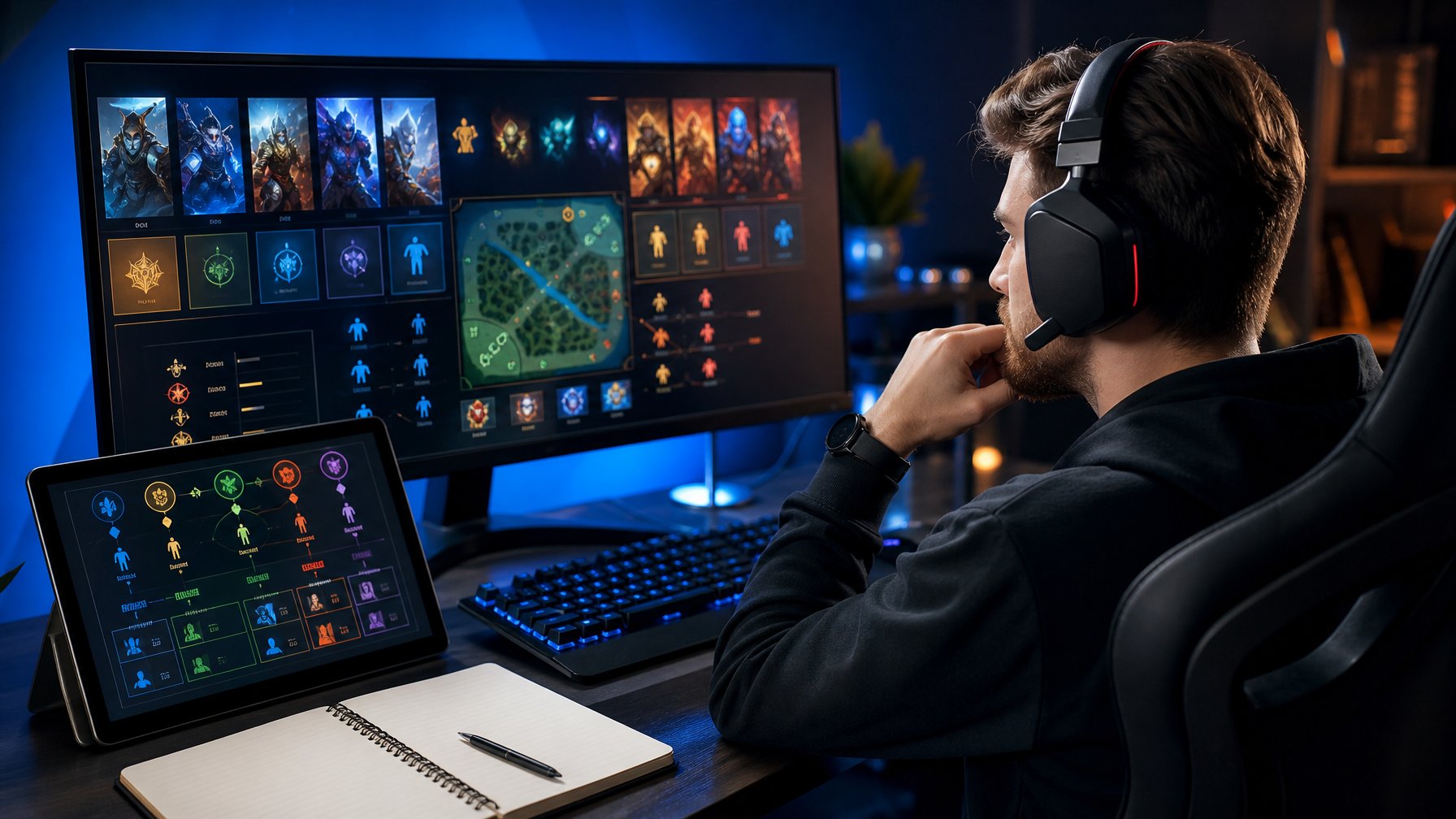
You will coordinate hero picks, lane plans, and item timings to control tempo and secure objectives. Every stage demands specific priorities: draft synergy, lane advantage, vision and timing for Roshan, and clean transitions into teamfight-winning item windows.
Drafting Synergistic Heroes
Focus on role clarity and combo strength when you draft. Prioritize a reliable hard carry, at least one reliable support who can secure vision and save teammates (e.g., a single-target stun or a reliable displacement), and an initiator or frontliner who enables engage windows. Balance magic and physical damage so enemy itemization (BKB, Ghost Scepter, Pipe) can’t negate your whole plan.
Lock in heroes that amplify each other’s strengths: pairing AOE lockdown with AOE nukes or single-target burst with reliable setup works best. Pick counters only when they disrupt enemy cores without sacrificing your team’s core functions. Consider tempo: do you draft for early push, split-push, or late-game scaling? Communicate priority items (Blink, Mek, Aghs, BKB) so lanes and jungles plan gold flow around them.
Early Game Objectives
Win lanes through creep equilibrium, efficient pull and stack usage, and timely rotations. Secure first blood when you have a level advantage or reliable disable; it grants gold and momentum. Use support items—Sentry, Observer, Tango, and early clarities—to maintain lane presence and contest rune control at 0:00 and every two minutes.
Apply objective-driven pressure: deny towers with coordinated rotations, punish enemy overextensions, and convert lane advantages into map control with wards and deep vision. If you draft a jungler or offlaner that farms quickly, prioritize stacking for them and protect their timing for core item spikes. Track enemy item timings (Magic Wand, Soul Ring, Bottle) and adjust aggression accordingly.
Mid to Late Game Decision-Making
Shift focus to vision, Roshan control, and item windows that decide teamfights. Time your initiation around core item completions—Blink Daggers, BKBs, and major Aghanim upgrades. If you lead, force plays to take towers and Roshan; if behind, look for pickoffs and defensive high-ground posture to stall enemy momentum.
Make objective-based calls: trade a tier 2 for a safe lane farm cycle or commit to Roshan when you can contest it with disable and sustained damage. Maintain map awareness: keep one support on Sentry/Smokes for pick attempts and one clearing enemy wards. Finally, set rules for engagements—who initiates, who follows up, and when to disengage—to avoid chaotic fights that favor the opponent.
Adapting to Opponent Strategies
Identify the enemy’s win condition quickly, watch their item timings, and shift your play to deny their strengths while amplifying your team’s power.
Counterplay Tactics
Pinpoint the enemy core that decides fights and lanes; focus your pressure and vision to interrupt their farm. Use targeted harass, lane swaps, or aggressive roams to delay their timing windows such as Battle Fury, Blink Dagger, or key level thresholds.
Pick specific disables or silences when a hero relies on cast time or channeling. For example, pick Glimmer Cape or Lotus Orb against heavy magic burst, or buy Heaven’s Halberd versus right-clickers who rely on sustained output.
Coordinate with teammates on focus priority in fights. Mark a single target for burst, or force out enemy ultimates with bait-and-switch plays. Communicate cooldowns so you do not waste disabling items when the enemy is already stunned.
Responding to Enemy Movements
Track enemy rotations on the minimap and adjust lane assignments proactively. If the offlaner leaves to gank mid, pull or freeze the safe lane to prevent tower damage and deny experience.
Place deep wards near their jungle entrances to see rotations before they commit. Use Sentry/Ward combos to punish support movements and secure pickoffs that tilt map control.
When the enemy groups for objectives, you can split-push opposite lanes or smoke with a strong lineup to contest. Time your relocations around their ultimates and key items — avoid committing to fights where they hold a powerspike advantage.
Adjusting Item Builds
Change your build based on enemy heroes and their item timings rather than following generic guides. If the enemy core builds BKB early, incorporate physical damage or break effects into your kit (e.g., Silver Edge, Diffusal Blade) to bypass immunity.
Prioritize utility items when opponents threaten your backline: Force Staff, Glimmer Cape, and Eul’s offer mobility and save potential. Versus heavy magical damage, buy early magic resistance like Hood or Pipe; versus heavy physical, consider armor items or evasion (Halberd, Solar Crest).
Communicate who buys which team items to avoid redundancy. If multiple teammates need survivability, decide who gets Mek/Guardian Greaves and who builds single-target saves, so your item economy best counters the enemy composition.
Cultivating a Winning Team Mindset
Focus on reliable communication, shared roles, and steady improvement. Build trust through consistent behavior, treat losses as data, and mark progress with concrete metrics.
Building Mutual Trust
Trust forms when teammates deliver predictable actions under pressure. Use pre-game role assignments and clear shot-caller signals so everyone knows who initiates fights and who secures objectives.
Practice a short, repeatable voice protocol: call cooldowns, enemy positions, and intent in one or two words (“Ult ready”, “Top smoke”, “Going Rosh”). This reduces confusion in noisy moments.
Keep a log of repeated mistakes and who corrected them; review it between sessions. When players own errors and follow agreed adjustments, trust compounds.
Avoid blanket blame — point to the decision, not the person — and reward successful coordination with a quick verbal acknowledgment after each clutch play.
Learning From Defeats
Turn each loss into a targeted training plan. Identify three measurable causes (timing errors, vision gaps, itemization mismatch) and assign one primary correction for the next three games.
Use replay timestamps to mark the exact moments decisions cost the game. Focus on concrete fixes: move the ward at minute 8 to cover rune, buy a Mek by 15:00, or avoid 5v5 without Blink on your initiation hero.
Hold a five-minute debrief after ranked sessions. Limit comments to “what happened,” “why,” and “what we change next game.” This keeps the conversation practical and prevents endless blame cycles.
Rotate the review leader so everyone develops analytical skills. Over weeks, these small, specific adjustments compound into fewer repeated mistakes.
Celebrating Team Progress
Track progress with simple, visible metrics: average game duration, objective control percentage, and comeback wins per week. Display them in text channel pins or a short spreadsheet.
Celebrate incremental wins—successful smoke ganks, flawless Roshan takes, or a string of clean laning phases. Acknowledge both big plays and steady execution to reinforce desirable habits.
Use rituals after milestone matches: a quick screenshot of team items, a pinned highlight clip, or a “GG” message that calls out one positive. These rituals cement identity and motivate continued effort.
Keep celebrations concise and specific so they reinforce the exact behaviors you want repeated.
Popular Dota 2 Game Modes That Promote Teamwork
These game modes force coordinated drafting, lane assignments, and timing for objectives. They each emphasize communication, role clarity, and shared decision-making in different ways.
Ranked Matchmaking
Ranked matches pair you with teammates and opponents based on MMR, making coordination both necessary and rewarding. You must lock roles, manage lane assignments, and execute objective timing (Roshan, towers, high ground pushes) to climb the ladder.
Use clear role calls before the draft and during loading to reduce confusion. Prioritize ping-based communication if voice isn’t available. Focus on macro tasks: map control with wards, coordinated smoke ganks, and synchronized item timings (e.g., blink initiator + follow-up disables).
Key teamwork elements:
- Draft synergy: cover counters and power spikes.
- Shot-calling: one or two players guide tempo.
- Objective focus: prioritize towers, Roshan, and barracks together.
Captains Mode
Captains Mode centers leadership and structured drafting. One player acts as captain and controls the pick/ban phase, so you must trust and support that leader’s strategy.
Communicate hero preferences and counter picks during the pre-draft phase. The captain balances bans to remove enemy comfort picks and crafts a team composition that covers initiation, wave clear, and late-game scaling. During the match, the captain often assumes macro responsibility: initiating smoke plays, assigning lanes, and timing teamfight ultimates.
Practical tips:
- Provide concise hero-role info to help the captain.
- Assign a secondary shot-caller for fights if the captain handles draft only.
- Use a checklist for power spikes (items/levels) to coordinate when to force fights.
Turbo Mode
Turbo Mode shortens game length and increases gold/XP gain, forcing faster decision-making and cooperation. You must adapt to quicker item timings and compressed power curves to win coordinated skirmishes.
Teamwork in Turbo focuses on early rotations, rapid objective trades, and consistent lane pressure. You should prioritize pressuring towers and grouping for early Roshan-style objectives when available. Communication should be brief and action-oriented: call target focus, commit to engages fast, and avoid prolonged planning.
Quick teamwork checklist:
- Early vision for aggressive rotations.
- Clear kill or retreat calls.
- Fast item timing coordination (e.g., Mek, Blink, Aghs rushes).
Utilizing In-Game Tools for Improved Coordination
You can use Dota 2’s built-in tools to reduce miscommunication, secure objectives, and time plays with precision. Focus on timely pings, shared vision through wards and glyphs, and structured voice use to keep everyone aligned.
Ping System and Signals
Use the ping wheel and quick-chat bindings to transmit precise, low-friction information without typing. Mark enemy positions with the “Danger” ping, call missing lanes with the “Missing” ping, and highlight objectives using the “On My Way” or “Attack” pings.
Bind a few custom hotkeys: one for map pings, one for camera follow, and one for quick target pings; this reduces time spent hunting menus during fights.
Combine pings with quick emotes or typed timers when you need more context. For example, ping a rune spawn and type “30s” to give a clear timer. Avoid excessive or ambiguous ping spamming—limit pings to actionable moments like ganks, retreats, or Roshan windows.
Shared Vision and Warding
Place Observer Wards to secure high-traffic lanes, Roshan approaches, and enemy jungle entrances. Prioritize line-of-sight that connects to your team’s likely rotations so you can see initiation paths before fights start.
Use Sentry Wards at choke points and deward between minute 6–12 and again midgame; this denies enemy vision and protects your aggressive wards.
Coordinate which player buys which ward and who carries Sentries—assigning responsibility prevents gaps. Use the shop’s quick-buy or courier deliveries to ensure wards arrive on time. When vision reveals a crucial enemy hero, ping it immediately and note cooldowns or item timings in chat.
Voice Chat Features
Use party voice or team voice channels for real-time callouts during coordinated actions like smoke ganks and high-ground pushes. Keep calls concise: state the target, initiation timing (e.g., “3…2…go”), and escape plan.
Mute noisy or unhelpful players in team channels to preserve clarity. If you play with friends, set a consistent callout vocabulary (short phrases for “commit,” “fall back,” “focus carry”) to speed decisions.
Record or review voice comms after matches if you play competitively to spot coordination failures and successes. Limit chatter during fights; silence unnecessary commentary and let one or two shot-callers direct the play.
Conclusion
You gain tangible benefits from playing Dota 2: sharper strategic thinking, clearer team communication, and improved decision-making under pressure. The game’s depth rewards practice and adaptability.
Expect a steep learning curve at first, but steady progress as you study heroes, item builds, and map control. Your teamwork skills will grow faster when you focus on roles and shared objectives.
Keep experimenting with different heroes and tactics to find what suits your playstyle. Use replays and feedback from teammates to refine your choices and timing.
Key takeaways:
- Dota 2 emphasizes coordination and strategy over solo play.
- Small improvements in communication can change match outcomes.
- Consistent practice converts knowledge into reliable in-game performance.
You can enjoy Dota 2 casually or pursue competitive play; both paths develop useful cognitive and social skills. Play deliberately, communicate clearly, and treat losses as data for improvement.