


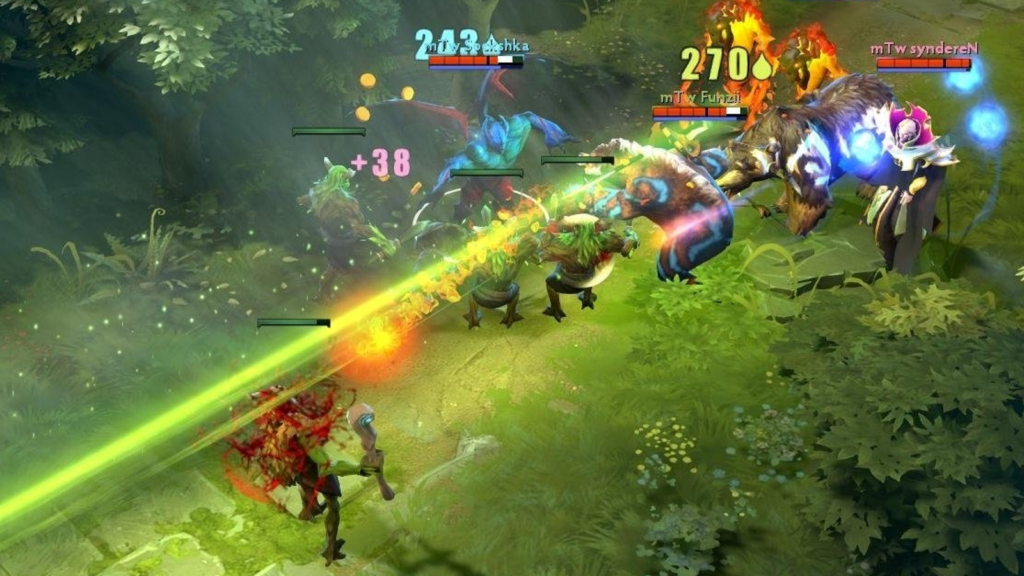
You jump into Dota 2 to chase clutch moments, and what keeps you coming back are the heroes whose designs demand creativity and precision. This article shows which Dota 2 heroes stand out for truly unique kits and which iconic skills can turn a mediocre game into a highlight reel, so you can pick, learn, and play with purpose.
Expect clear breakdowns of what makes a hero feel different, the signature abilities that shape teamfights, and practical tips to start mastering those mechanics. Whether you prefer easy-to-use heroes that teach fundamentals or high-skill champions that reward practice, you’ll find guidance to sharpen your decisions and impact in every match.
Overview of Dota 2 as an Exciting Game
Expect deep strategic layers, fast-paced team fights, and a huge hero pool that lets you shape each match with item choices and timing.
Core Gameplay Elements
You control one hero in a 5v5 map where destroying the enemy Ancient wins the match. Each hero has unique abilities and a primary attribute (Strength, Agility, or Intelligence) that defines playstyle and item priorities.
Creep waves, towers, and neutral camps create objectives you must balance with kills and map control. Farming efficiently—last-hitting creeps and taking neutral camps—scales your items and power curve.
Vision, wards, and rune control influence ganks and rotations. You’ll coordinate with teammates for smoke ganks, Roshan attempts, and objective pushes while managing cooldowns and ultimates.
Item timing and situational purchases (e.g., Black King Bar, Blink Dagger, Force Staff) often decide engagements more than raw hero levels. Mastery comes from macro decisions: when to push, farm, or contest objectives.
Popularity and Competitive Scene
Dota 2 remains one of the largest MOBA esports with a multi-stage pro circuit and Valve’s annual The International prize pool historically reaching multi-million-dollar figures. You’ll find pro teams from regions like Europe, CIS, China, Southeast Asia, and the Americas competing in majors and qualifiers.
Match formats vary between best-of-one in group stages and best-of-three or five in playoffs, demanding both preparation and adaptability. The patch-driven meta forces teams to innovate hero drafts, counter-picks, and strategic tempo shifts.
Viewership spikes during major events and regional leagues. If you follow pro play, you’ll notice recurring strategic archetypes—fast-paced early gank lineups, heavy teamfight cores, and late-game scaling carries—that shape how the public meta evolves.
Community and Esports Growth
You can access Dota 2 for free, with Valve supporting the game via cosmetics and a battle pass that funds community events and sets. This model keeps a low barrier to entry while fueling content creation and tournament support.
The community produces guides, hero builds, and replay analysis across sites and platforms, helping you learn specific matchups and item timings. Coaching services and talent streams offer practical tips for improving your MMR and role knowledge.
Tournament ecosystems continue expanding through third-party organizers and regional leagues. That growth creates more pro pathways and spectator content, so you can follow rising teams and emerging metas throughout the year.
Defining Unique Dota 2 Heroes
You’ll learn what makes a hero stand out mechanically, how diverse roles shape team composition, and how distinct mechanics change match dynamics. Expect concrete criteria, role examples, and clear gameplay consequences.
Criteria for Hero Uniqueness
Evaluate uniqueness by mechanics, interactions, and skill expression. Mechanics include multi-unit control (e.g., Meepo), complex spell combinations (e.g., Invoker), or ability-stealing (e.g., Rubick). Each mechanic creates specific learning curves and counterplay patterns you must master.
Unique heroes often force novel item choices and laning patterns. For instance, a hero with global presence demands vision and rotation discipline, while summon-based heroes require wave control and micro-management. Consider also situational utility: some abilities alter objectives (teleportation, map-wide ultimates) rather than pure damage output.
Use these quick checkboxes when assessing a hero:
- Distinct core mechanic (micro, global, stealing)
- High variance in outcomes based on player skill
- Itemization that deviates from standard builds
- Novel interactions with other heroes or map objectives
Role Diversity in Hero Design
Designers assign heroes to roles but also create hybrids that blur lines. You’ll see pure cores (carry, mid) and pure supports, plus niche hybrids like roamers, offlaners with lane-push tools, or supports who scale into cores. This diversity lets you draft around specific strategies.
Role diversity affects laning and tempo. A support with strong zone control changes how you contest runes and secure safelane farm. A core with heavy teamfight initiation forces you to prioritize BKB timing or counter-initiation items. Pay attention to how a hero’s kit shifts responsibilities within a lane or team.
Common role-driven design elements:
- Lane sustain vs. aggression
- Scaling power curve (early skewer vs. late-game carry)
- Teamfight presence (AoE control, single-target disable)
- Objective control (siege, Roshan influence)
Impact of Unique Heroes on Gameplay
Unique heroes alter draft priorities and in-game decision-making. When you pick a hero with unconventional mechanics, opponents must adapt—either by drafting counters or by changing play patterns to avoid the hero’s strengths. That creates a meta layer you can exploit.
On a tactical level, unique abilities change micro and macro play. Micro-heavy heroes demand practice and attention during fights, while global or objective-changing abilities require map awareness and coordinated rotations. Expect shifts in item timing, ward placement, and smoke play when such heroes are present.
Consider these practical impacts:
- Increased drafting value for unpredictability
- Greater emphasis on vision and rotations
- Higher variance in match outcomes based on individual execution
Iconic Skills That Shape Dota 2
These skills define hero identity, decide fights, and force strategic adaptations. You’ll see how distinct mechanics, timing, and interaction with items and terrain create lasting impact in matches.
Characteristics of Iconic Skills
Iconic skills stand out through clear mechanics you can learn quickly yet master over time. Think of stuns with long range (e.g., a fissure or echo slam), single-target disables that scale with levels, or area spells that punish clustered positioning.
They often include strong escalation: a basic spell becomes game-changing late when paired with items or levels. You can recognize them by reliable outcomes—consistent crowd control, damage spikes, or tempo shifts—rather than randomness.
Design-wise, these skills mix instant effects (stuns, silences) and delayed or setup tools (root zones, projectiles). You can exploit predictable cast times and trajectories to outplay opponents or combine them with allies’ abilities for multi-hero combos.
Influence on Team Strategies
Iconic abilities dictate draft priorities and lane matchups you choose before the game even starts. If you pick a hero with a global or long-range initiation, your team can emphasize pick-off play; opponents must draft detection and long-range wards.
During laning, these skills force roaming patterns: heroes with stun chains or displacements draw extra attention from supports and sentry usage. In mid-to-late game, teams build around them—itemizing for lockdown extension (Aether Lens, Eul’s, BKB timing), or drafting complementary ultimates to maximize follow-up.
You should coordinate cooldown windows and vision control around the signature skill. Successful teams track ability timers and force fights when the enemy’s defining spell is down, converting timing advantages directly into objectives.
Memorable Moments Created by Abilities
Abilities produce highlight plays that shape player memory and pro meta. Epic examples include multi-hero arena stuns that turn a losing fight into a base defense, or single-skill rampages where one well-timed ult wipes the enemy team.
You’ll remember clutch saves too: a perfectly timed blink-echo, a defensive force-staff push, or a global teleport that snatches a Roshan steal. These moments often hinge on mechanical precision—target selection, angle of cast, and split-second reaction.
Item interactions amplify the spectacle. When an iconic skill combines with a shiva, refresher, or blink dagger, outcomes intensify and create viral clips. You can replicate such plays by practicing positioning, cooldown awareness, and prediction of enemy movement.
Most Unique Dota 2 Heroes
These heroes stand out because their kits force you to play differently from standard carries, supports, or initiators. Each one demands specific mechanics, decision timing, and game-sense that reward practice and strategic creativity.
Invoker
Invoker’s design centers on combining three reagents — Quas, Wex, and Exort — to cast 14 distinct spells. You must manage reagent levels and invoke the desired spell quickly; that mechanic turns positioning and cooldown control into core skills. Rail your practice toward muscle memory for common combos like Cold Snap → Forge Spirit → Sun Strike, and learn which spell fits each fight stage.
Itemization matters: Aghanim’s Scepter changes his late-game toolkit, while Blink Dagger, Eul’s, or Aether Lens alter his cast reliability. Expect a steep learning curve but huge outplay potential when you land precise crowd control and burst sequences.
Meepo
Meepo plays like controlling several heroes at once: every clone gains full stats and levels except for some unique exceptions. You must micro multiple units simultaneously to farm efficiently, secure objectives, and chain Poof teleport bursts. Mistakes with one clone often mean death for all, so split-pushing and constant map awareness become survival skills.
Typical builds prioritize items that benefit all copies, like Aghanim’s Shard, Ethereal Blade, and Blink. Practice keyboard shortcuts, control groups, and camera hotkeys to reduce mechanical strain. Playing Meepo rewards map dominance and rapid objective-taking, but punishes single misclicks heavily.
Techies
Techies redefines map control by converting the map into a trap field using remote mines, Proximity Mines, and Stasis Traps. Your impact comes from vision denial, zoning, and forcing enemy pathing rather than direct teamfights. Place mines around high-traffic areas, Roshan approaches, and jungle entrances to convert routine movements into kills.
Techies players balance patience with deception: fake retreats, baited fights, and layered mine setups create high-leverage moments. Item choices like Aghanim’s Scepter and Force Staff increase survivability and mine placement flexibility. Your game sense must focus on anticipating enemy routes and bait timing instead of raw mechanical duels.
Io
Io (Wisp) specializes in tethering and relocating allies with a toolkit that amplifies mobility and sustain. You must pair Io with a partner who capitalizes on temporary burst or split-push potential; classic pairs include Tiny and Gyrocopter. Manage Tether to transfer movement speed and health regen, and use Relocate to execute surprise ganks or save teammates across the map.
Io’s micro relies on timing heals, relocating into ideal terrain, and juggling Overcharge without sacrificing mobility. Items such as Aghanim’s Scepter and Guardian Greaves extend tethered survivability and teamfight presence. Playing Io demands excellent communication and precise timing to turn a single tether into decisive plays.
Signature Skills of Popular Heroes
These ultimates define team fights and require timing, positioning, and game-sense to use effectively. You’ll learn how each ability works mechanically, the situations that maximize its impact, and common counters you should watch for.
Echo Slam (Earthshaker)
Echo Slam deals area damage centered on Earthshaker with extra bonus damage per nearby enemy unit. It scales with unit density, so you get the largest payoff in clustered team fights, Roshan pit skirmishes, and tower-defense moments.
You must position yourself to land the initial stun with Fissure or Blink Echo Slam to prevent enemies from dispersing. Use Fissure to block escape routes or to trap enemies against terrain; a Blink Dagger is the standard item to ensure perfect initiation timing.
Watch for Spell Immunity (Black King Bar) and long-range disables that interrupt your cast. Pair Echo Slam with allies who provide follow-up AoE control—chain stuns, silence, or damage amplifiers dramatically increase kill conversion.
Black Hole (Enigma)
Black Hole creates a channeled, powerful vortex that drags and disables enemies in a large radius while dealing consistent damage. It forces your team to commit; one successful Black Hole can win a fight or enable high-value pickoffs.
You must protect Enigma during the cast—blink initiation from an ally or a Fog of War approach increases success rate. Use items like Aghanim’s Scepter to shorten cooldown/augment effects when available, and combine with heroes who provide lockdown and burst to prevent enemies escaping mid-channel.
Be mindful of abilities that break channels or grant spell immunity. Heroes with it often bait Black Hole—keep vision and be ready to cancel channeling if an enemy’s BKB or spell-absorbing item negates its effect.
Sun Strike (Invoker)
Sun Strike is a global, delayed pure-damage nuke that hits a precise location after a short cast time. You must predict enemy movement and communicate with teammates for successful long-range kills, especially versus low-HP or teleporting heroes.
Practice timing by tracking enemy cooldowns and common paths. Use allied crowd control or vision—Sentry wards, Smoke, or a teammate’s stun—to narrow target movement and increase accuracy. Multiple Invokers coordinate Sun Strikes for lethal global zoning and finishing blows.
Counterplay includes mobility items (Blink, Force Staff), spell immunity, and predictive jukes. Because Sun Strike deals pure damage, it bypasses armor but not magic immunity, so timing against BKB windows matters.
Hook (Pudge)
Hook is a skillshot that pulls the first unit it hits toward Pudge and deals damage on connection. It creates high-skill outplay potential: a single successful hook can isolate a support, start a kill, or turn a gank into a core pickoff.
You must master angles, timing, and prediction—hooks from fog, from behind terrain, or after baiting spells yield the best results. Combine with Dismember (Pudge’s ultimate) for guaranteed kills, and use Force Staff or Blink on allies to convert pulls into multi-kills.
Counters include items that change position (Blink, Force Staff), Blademail to punish close-range engages, and long-range vision to avoid surprise hooks. Practice landing consistent hooks in unranked games to build muscle memory for clutch plays.
How to Master Heroes With Unique Abilities
Focus on pairing complementary skills, track exact cooldown windows, and use vision and map control to force fights where your hero’s kit shines.
Learning Effective Skill Combos
Identify the hero’s primary damage, crowd control, and mobility tools. Practice a few sequences in a lobby until your muscle memory hits the timing reliably. For example, if your hero has a silence + gap-close + nuke sequence, train the gap-close to land between the silence and nuke so the target cannot react.
Use a short checklist when training combos:
- Order: which ability to cast first.
- Buffer: any movement or animation cancels.
- Follow-up: which item or ally setup extends the window.
Record replays of successful and failed combos. Note exact cast delays and adjust your inputs. Keep combos flexible: if an enemy has BKB or escape, swap to a peel or zoning sequence instead.
Understanding Cooldown and Timing
Learn each ability’s base cooldown and how items, talents, or levels change it. Write down two critical timings: your damage window (when most abilities are available) and your vulnerable window (when major skills are down). Use those windows to choose fights.
Manage cooldowns actively during engagements. Use short-cooldown spells to harass, but reserve long-cooldown ultimates for guaranteed kills or team fights. Consider these timing rules:
- Use mobility or stun to initiate only when key nukes are ready.
- Don’t blow defensive spells preemptively; hold them for reactionary plays.
External factors matter: enemy respawn timers, Roshan windows, and buyback status often dictate when your cooldowns matter most. Track those on the minimap and in chat to synchronize your timing with team objectives.
Applying Map Awareness
Place and contest vision around your hero’s power zones—lane, jungle camp, or Roshan pit—so you can force fights where your abilities are strongest. Buy a combination of wards and detection items tailored to your role and hero needs.
Constantly scan the minimap every 5–10 seconds. Note enemy locations and likely rotations, then position to catch isolated targets or avoid multi-hero collapses. Use a quick habit checklist:
- Ward high-ground before pushing.
- Ping missing enemies and retreat if multiple disappear.
- Group only when your ult and primary spells are charged.
Adapt your roaming and farming based on vision. If you lack vision, play safer and trade fewer abilities; when you control vision, play aggressively to maximize your hero’s unique kit.
Strategies Leveraging Iconic Skills
You will learn how to pick heroes that enable specific team plans and how to respond when opponents rely on a single signature ability. Focus on drafting synergies, timing windows, and practical counters that change fight outcomes.
Drafting Around Signature Abilities
When you draft, prioritize heroes whose signature skills create clear win conditions for specific phases. Pick Witch Doctor for reliable lockdown and teamfight follow-up if you intend to fight around Roshan windows; his Death Ward combos with stuns like Earthshaker or Legion Commander. Choose Puck or Queen of Pain when you want lanes that translate into pick-off pressure; their mobility forces enemy vision and isolates targets.
Consider item and role allocation as part of the draft. If your core needs Blink or BKB to use its signature spell, draft supports that can buy time (e.g., Dazzle, Shadow Shaman). Use a simple table to track win conditions:
- Hero — Signature Skill — Team Role — Draft Priority
- Puck — Dream Coil — Initiation/control — High vs. mobile enemies
- Tidehunter — Ravage — Frontline teamfight — High vs. grouped comps
Avoid drafting multiple heroes that require the same timing item unless you plan to accelerate farm. Lock in one primary plan and pick secondary heroes that cover its weaknesses, such as gap closers or silences.
Counterplay and Adaptation
You must recognize timing and item thresholds that enable signature skills and plan counters accordingly. If the enemy Tiny relies on Blink-Combo, buy detection and positional tools: Force Staff, Glimmer Cape, or place sentries to deny Blink initiations. Time your team’s BKB windows against channeling ultimates like Enigma’s Black Hole or Magnus’ Reverse Polarity so you don’t get walled by one spell.
Use targeted bans or picks to disrupt high-impact abilities. Pick Silencer or Doom when the enemy has multiple spell-dependent cores. Adapt during the game: if an enemy Morphling snowballs, alter lane assignment to shut his farm and draft vision to catch his Waveform attempts. Communicate cooldown timings and item spikes in chat so your team collapses or disengages precisely when signature skills are unavailable.
Evolution of Hero Abilities in Dota 2
You’ll see how abilities shifted from basic cast/passive designs to layered systems with talents, innate abilities, and game-changing ultimates. The changes affected play patterns, item builds, and hero roles across patches and community-driven balance.
Changes Through Major Patches
Valve introduced systemic changes that reshaped hero skills and power curves. Early patches kept abilities straightforward: three basic spells plus an ultimate and predictable scaling. Over time Valve added talent trees, cast-point adjustments, and mechanics like Innate Abilities (Patch 7.36) that give every hero a unique baseline effect from game start.
These updates altered item priorities and timing windows. For example, cast-point and backswing tuning changed animation-cancel opportunities, making some spell combos faster or harder to interrupt. Major reworks often convert passive bonuses into active, skill-expressive effects, forcing you to relearn timing and positioning for familiar heroes.
Key patch impacts:
- Talent system: more late-game flexibility.
- Innate Abilities: distinct early-game identity for every hero.
- Cast animation changes: shifted mechanical skill ceilings.
Community Feedback and Balance
You influence balance through telemetry, pro play, and forums; Valve monitors pick/ban/win-rate data and player reports. High-impact abilities with extreme win rates prompt targeted nerfs or reworks rather than blanket nerfs to keep diversity.
Pro matches frequently highlight unintended interactions; Valve then adjusts values, cooldowns, or mechanics rapidly in subsequent patches. Community-created analytics and hero facet discussions also push for changes that preserve unique identity while avoiding dominant combos.
Typical balance tools used:
- Cooldown/ mana / damage tuning
- Reworking mechanics from passive to active (or vice versa)
- Introducing item or talent counters
These measures aim to keep heroes distinct while preventing single abilities from warping the entire meta.
Why Unique Heroes and Iconic Skills Make Dota 2 Exciting
Unique hero designs and trademark abilities create constantly shifting match conditions, reward experimentation, and force you to adapt both strategy and execution. You encounter new interactions every game, whether from a rare item combo, lane matchup, or a perfectly timed ultimate.
Replay Value and Creativity
Dota 2’s roster of over 120 heroes means every match can highlight different synergies and counters. You can play the same hero in multiple roles — for example, a core Phantom Assassin in one game and a midlane tempo hero in another — which changes item builds, timing windows, and risk management.
Iconic skills like Earthshaker’s Echo Slam or Pudge’s Hook produce high-impact moments that pivot entire games. Those moments reward mechanical precision and smart positioning, so you find yourself practicing specific timings and angles to recreate them.
- Try combos: pair heroes with complementary ultimates for explosive playmaking.
- Explore off-meta builds: unusual item pickups can surprise opponents and teach new power spikes.
- Watch replays: study how top players sequence abilities under pressure.
These systems keep matches fresh and encourage you to invent plays rather than repeat routines.
Influence on Player Skill Development
Unique abilities demand both micro (mechanical) and macro (decision) skills, so your improvement becomes multifaceted. You learn precise animation cancels, cast-range calculations, and ability timing while also reading draft patterns and predicting enemy cooldowns.
Mastering a handful of heroes teaches fundamentals you transfer across the pool: wave control from a laning carry, vision and map awareness from a roaming support, or resource timing from a jungler. Iconic ultimates create teachable checkpoints — you can quantify progress by how often you land a multi-hero initiation or escape under pressure.
- Track metrics: farming rate, spell hit percentage, and successful ganks.
- Focus practice: isolate key mechanics (e.g., Blink-initiations or timing bait).
- Scale complexity: move from single-hero mastery to coordinating multi-hero combos.
This layered learning path keeps your skill curve steep and meaningful as you climb ranks.