


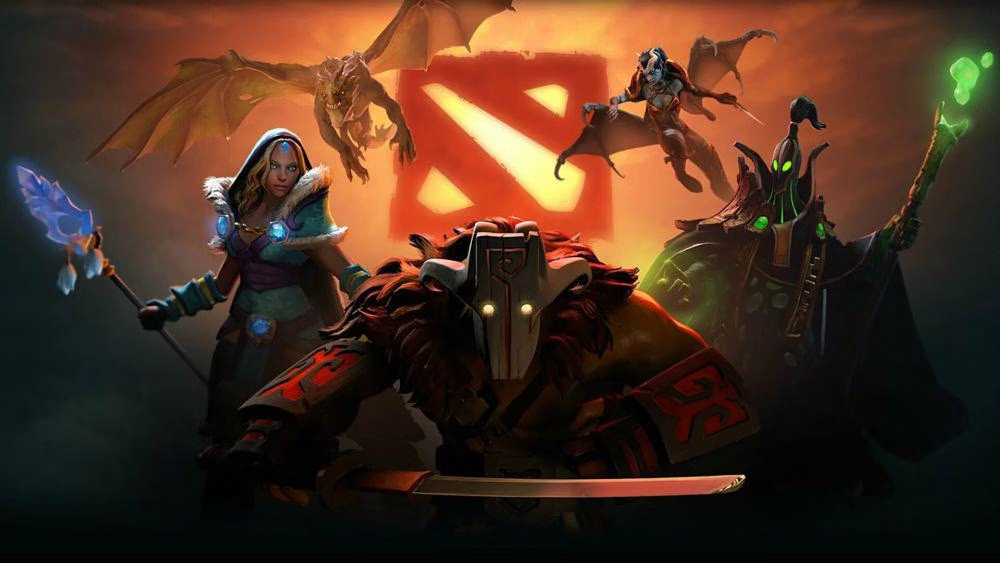
You’ll jump into a game that rewards planning, mechanical skill, and split-second judgment. Dota 2 challenges you with a deep hero pool, evolving metas, and high-stakes team play that make every match a unique test of strategy and execution. If you want a competitive MOBA where decision-making, resource management, and coordinated teamwork decide victory, Dota 2 delivers that experience consistently.
As you move through this article, expect clear breakdowns of core competitive mechanics, the strategic layers that shape matches, and how high-level teams coordinate mid-game tempo, objective control, and clutch plays. You’ll also find practical ways to improve your individual skills and in-game decision making so your contributions actually shift the outcome of each match.
Overview of Dota 2 Competitive Gameplay
Dota 2 matches hinge on hero roles, resource control, and map objectives. You must manage gold, experience, items, and vision while coordinating with four teammates to outmaneuver the enemy across a 3-lane map.
Core Game Mechanics
You pick one of 120+ heroes, each with distinct abilities and scaling. Heroes earn experience by being near enemy unit deaths and gold from last-hitting creeps, kills, and objectives, which directly affect item timings and power spikes.
Itemization shapes strategy: you buy boots, defensive items, or damage items to adapt to enemy heroes. Active items (e.g., Black King Bar, Blink Dagger) create play windows and counterplay. Ability cooldowns, mana management, and skill builds determine trade outcomes in lane and team fights.
Map control relies on wards, dewarding, and high-ground vision. You contest neutral camps and Roshan to deny resources and secure buffs. Rotations and smoke ganks exploit vision gaps to convert small advantages into towers and map dominance.
Objectives and Win Conditions
Your immediate objectives: secure lane farm, take towers, and control runes and jungle resources. Towers unlock deeper map access; their destruction reduces enemy safe space and increases your gold through map pressure and bounty.
Roshan provides Aegis and other consumables that swing team fights. Timing Roshan with your power spikes or enemy cooldowns can force decisive engagements. Sieging high ground requires coordination, vision, and item windows to avoid costly wipes.
Win conditions vary by draft and game tempo. You might aim for early tower trade and snowball with a strong carry, execute mid-game fight drafts around Roshan, or rely on late-game scaling and split-push tools to outlast opponents. You must align your play to these conditions and adapt when the enemy shifts strategy.
Tournament Formats
Most pro events use best-of series: BO1 in early groups, BO3 in standard brackets, and BO5 for grand finals. You should prepare for patch variability and strategic depth across multiple games, where teams can swap heroes and drafts between maps.
Group stages often employ round-robin or Swiss systems to seed brackets. Double-elimination brackets give teams a second chance through the lower bracket but increase match volume and endurance demands. Match pacing changes: BO1 favors risk-heavy drafts, while BO5 rewards deep hero pools and in-series adaptation.
Prize allocation, broadcast scheduling, and tie-break rules shape competitive incentives. You will see structured drafts (captain’s mode) with bans and picks that highlight counterpicks, and teams practice targeted strategies for common tournament metas.
Strategic Depth in Dota 2
You must balance pick synergies, clear role responsibilities, and map objectives to win high-level matches. Each decision—from draft bans to ward timing—directly shapes power spikes and team fight outcomes.
Hero Drafting Strategies
Drafting starts before you click a hero: target bans and sequencing control which power windows your team will hit. Prioritize denying opponents their win conditions with targeted bans (counter-picks, comfort heroes, or meta staples).
Pick order matters: early picks lock in flexible cores, while last picks secure precise counters or niche heroes that exploit the enemy draft. Aim for a mix of magic and physical damage to avoid single-item counters dominating fights.
Watch for lane matchups and combo potential. Select heroes that create reliable kill pressure in lane or scale predictably into key item timings. Coordinate ultimates and disables across picks so you can execute staged teamfight plans rather than relying on accidental synergy.
Role Distribution and Team Composition
Assign concrete responsibilities: one reliable hard carry, one tempo or playmaking mid, a durable offlaner who creates space, and two supports that cover vision and initiation. Make sure your carry has clear farm priority and that supports commit to stacking and pulling when appropriate.
Communicate item plans early so you avoid duplicated utility (for example, two Force Staffs unless you need both).
Balance initiation, lockdown, sustain, and split-push tools. If you pick multiple long-cooldown ultimates, add reliable follow-up control to guarantee kills. Conversely, if you lack initiation, draft lane-dominant heroes that force rotations and punish overextensions.
Map Control Tactics
Vision wins fights: place wards in key high-ground, rune, and jungle choke points before objectives spawn. Prioritize dewarding around Roshan and enemy high-traffic jungle paths to deny safe farming and set up ambushes.
Use smoke timings tied to item spikes (Blink, Shadow Blade, Shadow Amulet) to convert map control into tower and Roshan objectives. Push lanes strategically: shove a lane to force enemy rotation, then take vision and contest the exposed jungle.
Rotate with clear intent—secure vision first, then force a fight at a denyable objective. Maintain creep equilibrium when you need to delay opponent farm, and rotate cores into sidelanes to convert map pressure into tangible gold and map control.
High-Level Competitive Play
You’ll find a tightly coordinated mix of individual mechanical skill, mapped team strategies, and constant adaptation to patch changes. Expect to study pro decision-making, roster roles, and tournament formats that shape how matches are played at the highest level.
Professional Teams and Players
You’ll recognize teams like OG, Team Liquid, and PSG.LGD by their consistent international presence and strategic identities. Each team builds around a core playstyle: OG favors unconventional draft flexibility, Team Liquid emphasizes disciplined objective control, and PSG.LGD focuses on high-skill teamfighting.
Star players define roles and tempo. Midlaners often set game pace with item timings and rotations, while carries dictate late-game scaling. Captains and offlaners control vision, drafts, and macro calls.
You should track player statistics—K/D/A, net worth curves, and GPM—to evaluate impact. Roster stability and coaching staff also affect performance; teams with seasoned analysts adapt faster to meta shifts and prepare tailored strategies for opponents.
Key Tournaments and Championships
You’ll follow a hierarchy of events: Major regional leagues, Valve-sponsored Majors, and The International at the top. The International offers the largest prize pool and directly influences team reputations and sponsorships.
Regional qualifiers and DPC (Dota Pro Circuit) events determine points for Major invites, so every series matters for long-term season standing. LAN finals test teams’ mental resilience under travel and crowd pressure, unlike online qualifiers that emphasize consistency.
You should monitor prize distribution, broadcast schedules, and patch versions used in tournaments. These factors determine which strategies gain exposure and how teams prioritize practice and scrims leading into each event.
Meta Evolution
You’ll notice the meta shifts after every major patch, driven by hero buffs/nerfs, item reworks, and mechanical tweaks. Patch notes can change hero priority overnight—some support heroes move from backup picks to first-phase bans.
Teams respond by updating drafting templates, refining lane matchups, and altering hero pools for players. Analysts track pick/ban rates, win rates, and professional itemization trends to predict upcoming shifts.
You should study recent patch cycles and pro match replays to see which timing windows or item spikes decide games. Understanding why pros choose particular drafts helps you apply those concepts to your own ranked play.
In-Game Decision Making
You control tempo through resource allocation, timed movements, and information control. Make choices that convert gold, cooldowns, and vision into tangible map advantages and objective windows.
Resource Management
Manage gold, regen, and cooldowns deliberately. Prioritize items that complete power spikes for your role—carry completes a core damage item, support buys key utility like Glimmer Cape or Force Staff. Track enemy item timings too; knowing when they finish Black King Bar or Blink Dagger shapes whether you fight.
Split resources across waves, neutral camps, and buybacks. Secure lane farm when safe, pull or stack camps as support, and farm the jungle during downtime. Keep a reserve for buyback if your team plans a high-stakes objective. Use consumables to sustain tempo: Tangoes, Mangoes, and Smoke charges let you stay on the map longer and contest objectives.
Timing Attacks and Rotations
Time engagements around cooldowns and objective windows. Attack when key enemy spells are down or when your team has a clear item advantage. Use the respawn timers of towers and Roshan as anchors for planning pushes or forced fights.
Execute rotations with purpose: commit two or three heroes to a lane to force a tower trade or to relieve pressure. Tell teammates where you’re going and what you intend to achieve—simple calls reduce failed ganks. Rotate through safe jungle paths, use Smoke at unpredictable intervals, and avoid unnecessary skirmishes that reset favorable timing.
Vision and Information Gathering
Place and clear wards proactively to control information. Prioritize high-traffic locations: rune spots, jungle entrances, and Roshan approaches. As a support, buy Sentry Wards before warding high-value spots to avoid dewarding surprises.
Use vision to set up ambushes and avoid ganks. Ping missing enemies and track likely smoke routes. Keep a mental map of cooldowns and enemy positions based on vision—if you lose sight of the mid hero but see their side lanes pushed, assume they’re rotating and play cautiously until vision confirms otherwise.
Teamwork and Communication
You must make clear, timely calls, sync item and ability usage, and adjust roles mid-game when the enemy shifts strategy. Precise positioning, shared vision, and trust in shot callers turn close fights into wins.
Shot Calling and Leadership
You need one or two designated callers who issue concise, actionable orders. Use short phrases like “smoke mid, go now,” “commit Rosh,” or “back, no Ulti” to avoid cluttered comms. Prioritize calls about objectives (Roshan, towers), enemy vision, and timing windows (BKBs, Aegis).
Leaders should track cooldowns and item timings for both teams. When you call, state a reason and a fallback: “Initiate now — enemy TPs on cooldown; if we miss, reset to triangle.” Rotate leadership when a role change improves information flow, for example letting support call smoke movements while cores focus last-hits.
Coordinating Team Fights
You must assign initiation, follow-up, and peel roles before engagement. Identify who initiates (offlane/initiator), who chains disable (supports), and who provides damage windows (carry/mid). Call target priority: “Focus Void first” or “Ignore Ember, blow Zeus.”
Use synchronized cooldown windows. Ping item readiness like “My BKB 5s” or type “We have Aegis, force 5v5.” Maintain vision: place aggressive wards to secure flanks and deward the enemy’s escape routes. During fights, give short updates: “Swap now,” “Save stun,” or “Drop silence” to keep actions aligned.
Adapting to Opponent Strategies
You must read enemy item progression and adjust both draft and in-game tactics. If opponents build early Manta and Diffusal, instruct cores to buy detect and supports to stack disables. If the enemy prefers split-push, regroup and force objective trades rather than chasing lone heroes.
Change tempo when the enemy changes theirs. Switch to defensive posture if they secure early Roshan — place extra wards, buy defensive items, and wait for a favorable smoke. Communicate specific counterplay: “If they get Hex, save BKB until after Hex,” or “Force fights before their 25 talent comes online.”
Advanced Strategies for Victory
Focus decisions on item timing, hit your hero power spikes, and use mind games to force mistakes from opponents. Prioritize vision, objective control, and coordinated timing to convert small advantages into map control and Roshan opportunities.
Itemization Decisions
Choose items that solve immediate problems and scale with the game stage. If enemy silence or lockdown stops your impact, buy BKB or Linken’s early; if you need to enable a carry, prioritize Force Staff or Glimmer Cape for positioning and survivability. Track enemy core item timings—e.g., if they finish Diffusal or Silver Edge, adjust with Manta or Lotus Orb.
Balance gold efficiency with team needs. Don’t waste time on inefficient luxury items when your team lacks utility: choose support items (Eul’s, Solar Crest) to enable pickoffs or defensive items (Guardian Greaves) to sustain fights. Communicate planned purchases so your team times initiations around your key tools.
Power Spike Exploitation
Identify and track your and enemy hero power spikes precisely. Note specific levels and item completions—examples: Lina’s level 6 + Aghanim’s Scepter, Sven’s Mask of Madness + BKB window, or a Dark Seer with Mek timing. Time ganks and objective pushes to coincide with those spikes.
Use wards and creep equilibrium to create safe windows for exploiting spikes. If your mid hits a power spike, rotate a support to secure vision and smoke for a swift tower trade. Conversely, deny enemies farm and delay their spikes through targeted pressure, lane pulls, and Roshan control.
Psychological Warfare
Force opponents into mistakes by manipulating information and tempo. Fake objectives with a visible smoke, then split and pressure another lane. Use repeated predictable patterns to bait enemy spells and then punish with a counter-initiation item like Blink Dagger.
Exploit tilt and resource mismanagement without being toxic. Target an underleveled hero repeatedly to force risky plays, and punish greedy farmers by taking their jungle or contesting runes. Keep communication concise and confident to coordinate feints and ensure your team capitalizes on opponents’ mental errors.
Improving Gameplay Skills
You will focus on concrete, repeatable actions: review precise moments that cost or win games, practice team patterns, and build individual mechanics and decision-making through targeted drills.
Analyzing Replays
Open your replay at the match timeline and jump to key timestamps: first blood, tower kills, Roshan, and major teamfights. Note exact abilities used, item timings, and positioning for both teams. Record a short timestamped list of critical errors and successful plays (e.g., “12:34 — you missed stun on carry; buy Blink earlier next game”).
Use a simple checklist when watching: vision coverage, cooldown management, item progression, lane equilibrium, and objective timings. Mark who had map control and why. Export clips of 10–20 seconds for the moments you want to study in detail or share with teammates.
Compare your play to higher-rank players in the same hero role for two matches. Focus on one variable per review (e.g., ward placement or creep aggro). Repeat this loop weekly to track measurable improvements like fewer deaths before 10 minutes or faster mid-game item timings.
Training Methods for Teams
Run structured scrims with a clear agenda: 10-minute warmup, 30–45 minute scrim, 15-minute debrief. Assign a coach or shotcaller to log errors during the match in real time. Use short, focused objectives for each practice (e.g., “execute three smoke-gank attempts from Radiant jungle”).
Implement role-specific drills: supports practice stacked pull timings and lane control for 20 minutes; cores practice last-hitting under pressure and farming patterns for 25 minutes. Run scenario practices from replays: recreate a failed Roshan attempt and rehearse correct positioning and sequencing until it becomes routine.
Use a shared document to track scrim takeaways and a prioritized action list for the next session. Rotate heroes and strategies to widen team adaptability, then specialize two to three preferred strategies for ranked play.
Individual Skill Development
Split your practice into mechanical and cognitive blocks. For mechanics, run 15–30 minute daily drills: last-hit practice with custom lobby, spell-cancel combos in demo mode, and attack-move micro against creep waves. Track metrics such as CS per minute and reaction time to disable windows.
For cognition, study timing windows: rune spawns, power spike items, and high-ground siege timings. Practice decision trees: ask yourself “If I die here, what objective do we lose?” and rehearse the safer choice until it becomes instinct. Keep a short log of in-game decisions you regret and write the alternative choice next to each entry.
Use third-party tools for precise stats (e.g., net worth curves, ability usage heatmaps) and set weekly goals: reduce average deaths by X or shave Y seconds off your farming route. Review progress every week and adjust drills to target remaining weak points.
Community and Esports Ecosystem
Dota 2’s community drives daily matchmaking, content creation, and local tournaments, while the esports ecosystem supplies pro events, sponsorships, and career paths. You’ll find ways to watch, learn, compete, and turn skills into opportunities across grassroots and pro levels.
Dota 2 Fan Engagement
You can join a global fan base that organizes around teams, heroes, and events. Fans create and trade cosmetic items, discuss patch changes on forums like Reddit, and use platforms such as Discord to form pickup groups and coaching circles.
Live events and The International generate spikes in engagement through fantasy leagues, in-game Battle Pass activities, and community-run viewing parties. Local LANs and university clubs keep the scene active between majors, giving you entry points to play or volunteer.
Engagement also shapes meta discussion. When top players innovate builds or item timings, you’ll see rapid adoption in replays, guides, and ranked games. That feedback loop helps the game evolve while keeping fans involved.
Content Creators and Streamers
You’ll find a wide range of creators: high-skill coaches, pro-player streamers, caster duos, and montage editors. Streamers on Twitch and YouTube publish live games, patch breakdowns, hero guides, and replay analysis that help you improve and stay current.
Creators monetize via subscriptions, donations, sponsorships, and platform partnerships, which supports long-term content production. Many creators run weekly series—hero deep-dives, pub stomp sessions, and co-op educational streams—that provide reliable learning content.
Influential creators also shape community norms. You’ll see meta shifts reflected first in popular channels, and community critiques often lead to broader discussion on balance and etiquette. That makes creators both sources of entertainment and practical instruction.
Growth of the Esports Scene
The competitive scene blends Valve-run majors, regional pro circuits, and a robust amateur ladder. You can follow structured qualifiers that feed into international events, or enter community tournaments that spotlight emerging talent.
Sponsorships and franchising in some regions provide salaries and infrastructure, enabling players to pursue full-time careers. Cities with established esports hubs host bootcamps and talent academies, giving you clear development pathways from amateur to pro.
Tournament production values have grown: multicamera broadcasts, statistical overlays, and localized commentary expand viewership. This professionalization increases prize pools and media deals, creating more stable opportunities for organizers, talent, and content partners.
Conclusion
You’ll find Dota 2 demands both quick reflexes and long-term planning. Its layers of strategy—from hero selection to item builds and map control—reward players who study the game and adapt during matches.
The competitive scene keeps the environment dynamic. Patches and a global community push you to refine your skills and learn new metas regularly.
You can enjoy Dota 2 casually or pursue it as a serious esport. The same mechanics that create steep learning curves also enable deep mastery and meaningful teamwork.
Consider these practical takeaways:
- Focus on a small hero pool to accelerate learning.
- Practice communication and map awareness with teammates.
- Follow patch notes and pro play to understand meta shifts.
If you want a game that tests decision-making under pressure, Dota 2 offers that in abundance. Your progress will come from deliberate practice, study, and playing with others who push you to improve.