


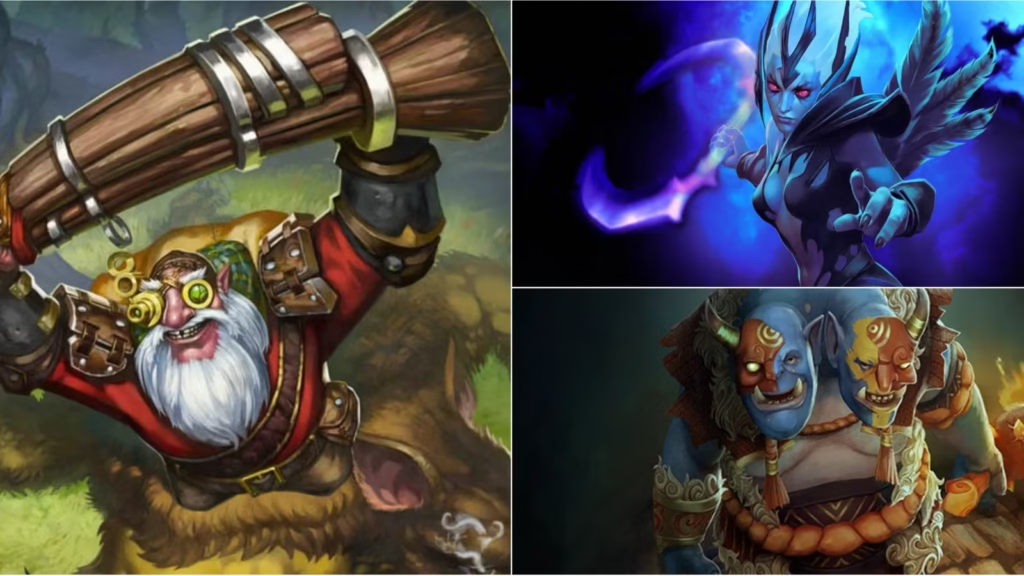
You’ve probably heard Dota 2 called legendary, but what keeps it thriving is simple: deep, skillful gameplay combined with constant updates and a passionate community. You get a game that rewards strategy, teamwork, and continuous learning, so every match feels meaningful and different. That lasting mix of challenge and evolution explains why players keep coming back.
This post will walk through Dota 2’s origins, how it compares with other MOBAs, the community and cultural impact it creates, and why players stay engaged over years. Expect clear explanations of the game’s unique mechanics, esports presence, and what the future might hold for a MOBA that still shapes competitive gaming.
Overview of Dota 2
Dota 2 places you in 5v5 tactical matches where hero selection, map control, and item timing decide outcomes. Expect long, skill-driven games with steep mechanical and strategic learning curves.
Core Gameplay Mechanics
You play one of over a hundred heroes, each with unique abilities and roles like carry, support, offlaner, or mid. Matches start with laning: secure farm, deny opponents, and rotate for kills or objectives.
Creep waves, towers, Roshan, and neutral camps form the resource map you must manipulate. Item builds change power spikes; timing key items (e.g., Black King Bar, Blink Dagger, Aghanim’s Scepter) often shifts fights.
Abilities have cooldowns, mana costs, and interactions that reward precise execution—skillshots, toggles, and combos matter. Vision, smoke dewarding, and positioning decide whether engagements go your way.
History and Development
Dota 2 evolved from the original DotA mod for Warcraft III, which community members maintained and expanded since 2003. Valve hired key contributors and released Dota 2 in 2013 as a standalone, free-to-play title.
Valve continued live development: regular patches, hero reworks, and seasonal events keep balance shifting. The developer-spectator features and workshop support enabled caster tools and community content.
The game’s esports growth stems from The International, Valve’s franchise-defining tournament with record prize pools that reinforced a professional scene. Community modding and third-party tournaments also sustained grassroots competition.
Notable Features
Hero diversity stands out: over 100 heroes with multiple viable item and skill paths. This creates high replayability and deep strategic breadth for you to explore.
Match length varies widely—10 minutes to over an hour—so pacing and comeback mechanics like buybacks and Roshan matter. Ranked modes, party queuing, and regional matchmaking affect your competitive experience.
Spectator tools, replay analysis, and a robust workshop let you learn from pros or create cosmetic items. Valve’s cosmetic economy and battle passes fund events while giving players ways to personalize heroes and stages.
Reasons Dota 2 Remains Popular
Dota 2 stays strong because it offers high-level competition, frequent balance and feature updates, and a community that shapes the game. These three forces interact: pro events attract viewers, updates keep strategies fresh, and the community sustains player interest and content.
Competitive Esports Scene
You get one of the largest prize pools and most-watched tournaments in esports with The International leading the way. Teams from regional qualifiers to major leagues create a clear path for aspiring pros and a steady stream of storylines for viewers to follow.
Matches reward deep strategic play and team coordination, so skill progression feels meaningful. Casters, analysts, and content creators amplify tactics and meta changes, letting you learn from high-level play. Spectator tools like replays and tournament broadcasts make following pro games accessible whether you watch live or catch highlights.
Constant Updates and Balance
Valve publishes regular patches that change item builds, hero abilities, and game mechanics, so your favorite strategies rarely stay dominant for long. These patches reward adaptation: you’ll experiment with new heroes or item sets each season to stay effective.
Beyond balance, Valve adds cosmetic items, events, and UI improvements that improve the play and viewing experience. Patch notes and public test realms let you preview changes, which helps you plan hero practice or experiment with off-meta builds before a patch lands.
Active Community Engagement
You benefit from a massive ecosystem of guides, coaching, and custom games produced by players worldwide. Content ranges from beginner hero guides to advanced drafting theory, so you can find resources that match your skill level and goals.
Community-run tournaments, modders, and streamers keep the game social and varied. Valve’s workshop and item creation system also let creators earn revenue, which encourages ongoing contributions and gives you a steady flow of new cosmetics and community-driven content.
The Unique Appeal of MOBA Games
MOBA games combine tight team coordination, a wide roster of playable characters, and high replay value through evolving match dynamics and player choice. These elements shape how you learn, compete, and improve each match.
Strategic Team Play
You must coordinate roles, timing, and resources to win. Each player typically picks a role—carry, support, offlaner, jungler—and those choices dictate lane assignments, item builds, and early objectives like tower pushes or neutral objectives. Good teams plan power spikes (level or item timings) and execute around those windows.
Communication matters. You trade information about enemy cooldowns, vision, and item timings to set up ganks, rotations, and teamfights. Small decisions—who farms where, when to take Roshan/Baron-type objectives, or whether to contest vision—often determine the match outcome more than raw mechanical skill.
You also adapt mid-game. If an enemy snowballs, you change itemization, assign defensive heroes to lanes, or bait unfavorable fights. That layered strategy rewards both macro thinking and split-second tactics.
Diverse Hero Pool
A large hero roster gives you meaningful choices every match. Each hero has distinct abilities, role flexibility, and item synergies that change power curves. You learn counterpicks, exploit matchups, and discover niche builds that turn a weak lane into a comeback opportunity.
You refine individual hero mastery over time. Knowing ability ranges, cast times, and animation cancels improves last-hitting, trading, and spell combos. At the same time, team composition matters: pairing initiation heroes with follow-up damage or combining crowd control with area denial multiplies effectiveness.
Frequent hero updates keep the roster fresh. Balance patches, new heroes, and item changes force you to relearn certain interactions while rewarding experimentation and creativity.
Replayability
Every match creates a unique combination of draft, skill execution, objectives, and player interactions. Even familiar heroes feel different when teammates choose unusual builds or opponents employ unexpected strategies. Those small variations produce countless distinct scenarios.
You encounter varied pacing: a fast-snowball game that ends before 30 minutes, or a late-game slugfest requiring precise vision and resource control. Ranked ladders, casual modes, and custom games offer different stakes and learning environments, which keeps you engaged across play sessions.
Progress systems—matchmaking, MMR, achievements, and cosmetic goals—give you measurable targets. They motivate incremental improvement and provide reasons to revisit the game beyond a single win or loss.
Dota 2’s Impact on Gaming Culture
Dota 2 changed how competitive games are structured, monetized, and consumed. You’ll see its influence in game design, global tournaments with large prize pools, and the way creators build careers around play and commentary.
Influence on MOBA Genre
Dota 2 pushed tactical depth and hero complexity, influencing other MOBAs to add richer item systems and diverse role options. You can trace features like talent trees, complex item interactions, and unrestricted hero mechanics back to Dota’s emphasis on emergent play.
Developers adopted a higher skill ceiling model after Dota 2 showed long-term player retention from deep mechanics. That shift led to more asymmetric hero kits and meta-driven balance patches across the genre.
You’ll notice modern MOBA patches now prioritize gameplay variety, comeback mechanics, and pro-driven changes—approaches Dota 2 refined through years of iterative balance.
International Tournaments
The International (TI) redefined prize pools and event production in esports. You can point to TI’s crowdfunding model—battle pass revenue funding multi-million dollar prizes—as the turning point that made esports financially viable for teams and players worldwide.
TI’s regional qualifiers and open qualifiers created clearer pathways for underrepresented regions to reach global stages. Organizers now plan multi-day LAN events, high production values, and live spectator experiences because Dota 2 proved audience demand for large-scale, prestige tournaments.
Streaming and Content Creation
Dota 2’s streaming scene helped professional players and casters convert gameplay into sustainable careers. You can find influencers who monetize coaching, highlight reels, and analysis, building followings that support secondary markets like subscriptions and sponsorships.
The game’s complex matches create varied content: patch analysis, pro replays, and niche hero guides. Content creators lean on that variety to keep audiences engaged, and platforms responded with features—VODs, clips, and subscription tools—that grew alongside Dota 2’s creator ecosystem.
How Players Stay Engaged With Dota 2
You keep returning to Dota 2 because the game delivers short-term goals and long-term progression through active updates, rewards, and community-driven content. The systems below show exactly how Valve and the community maintain player attention and motivation.
In-Game Events and Rewards
Seasonal events, Battle Passes, and limited-time game modes give you concrete targets: earn cosmetics, complete event-specific challenges, or unlock stretch goals tied to large-scale tournaments. Battle Passes typically layer daily and weekly missions with milestone rewards, so you can play a few matches and still make visible progress toward exclusive sets, mounts, or emotes.
Event modes often change core rules or heroes for variety, which refreshes the meta without requiring full relearning. Valve pairs these with direct incentives — treasure drops, seasonal courier designs, and compendium-style rewards — that appeal to collectors and competitive players alike. The predictable cadence of events also creates urgency: you know rewards will vanish, which nudges you to log in and play.
Community Tools and Workshops
You rely on community tools to learn, share, and customize your Dota 2 experience. The Steam Workshop supplies thousands of player-created cosmetics, HUDs, and announcer packs; quality items can be subscribed to and tested immediately in matches or lobbies. Workshop creators often iterate based on your feedback, so popular items improve quickly.
Third-party sites and tools provide replay analysis, hero guides, and stat tracking to speed up skill growth. Tournaments, player-run leagues, and coaching communities use Discord and in-game lobbies to organize scrims and mentor sessions. Those systems turn passive watching into active participation: you can import a replay, compare item timings, and apply specific fixes in your next match.
Comparing Dota 2 With Other MOBA Games
Dota 2 emphasizes player-driven decision making, mechanical depth, and high-impact itemization. Expect steeper learning but greater autonomy over game flow compared with MOBAs that streamline progression and ability use.
Self-Sufficiency vs. Hand-Holding
You control many systems that other MOBAs automate. In Dota 2 you manage last-hitting, courier usage, item timings, rune control, and deny mechanics. Those layers reward mechanical practice and map awareness but raise the barrier for new players.
Other MOBAs reduce micromanagement: they simplify item builds, auto-assign gold/experience zones, and provide clearer early-game power curves. That lowers frustration and shortens the time to feel effective.
If you like full control and the ability to recover from mistakes through skill or item play, Dota 2 rewards that. If you prefer faster onboarding and predictable power spikes, a more guided MOBA may suit your playstyle.
Hero Design Philosophy
Dota 2 heroes often have multi-component kits and interact deeply with items and the environment. Many abilities scale with items or change behavior based on game state, creating emergent combos and carry-versus-support flexibility.
Other MOBAs design champions with tighter, more consistent roles and clearer ability functions. Abilities tend to have predictable scaling and fixed roles (e.g., designated jungler, APC, or tank), which helps teams coordinate without extensive mechanical mastery.
You’ll find Dota 2 heroes can be built and played in varied ways across matches, increasing replay value but demanding game knowledge. If you prefer defined roles and faster strategic alignment with teammates, alternate MOBAs deliver that clarity.
Future Prospects for Dota 2
You can expect Dota 2 to remain a core title in competitive gaming due to its deep mechanics and committed community. Valve’s continued updates and community-driven content keep the game evolving without losing its strategic depth.
Competitive infrastructure will likely stay strong, with established tournaments and grassroots scenes both feeding into the pro ecosystem. That creates steady opportunities for players, organizers, and content creators to grow their presence.
Expect incremental improvements in accessibility and new player onboarding, rather than radical simplifications. These changes help reduce early frustration while preserving the high skill ceiling that longtime players value.
The community’s role will keep expanding; you will see more player-created cosmetics, mods, and feedback-guided patches. Community voting and contributions can shape item and set design, increasing player investment.
If you follow esports trends, Dota 2’s resilience stems from consistent viewership for major events and recognition within the industry. Those factors support sponsorships and media interest, which in turn sustain prize pools and broadcast quality.
Key areas to watch:
- Continued balance updates and hero reworks.
- Improvements to matchmaking and new-player experiences.
- Growing amateur and regional tournament ecosystems.
- Community-driven content and cosmetic design.
You should temper expectations for dramatic growth; Dota 2’s future looks like steady refinement and niche strength rather than explosive mainstream expansion.